
Digital donor wall: how to plan one and what it really costs
A plain guide to planning a touchscreen donor wall for a museum, school, library, or nonprofit. What to show, how to set giving levels, what it costs compared with plaques, and how to keep it current.
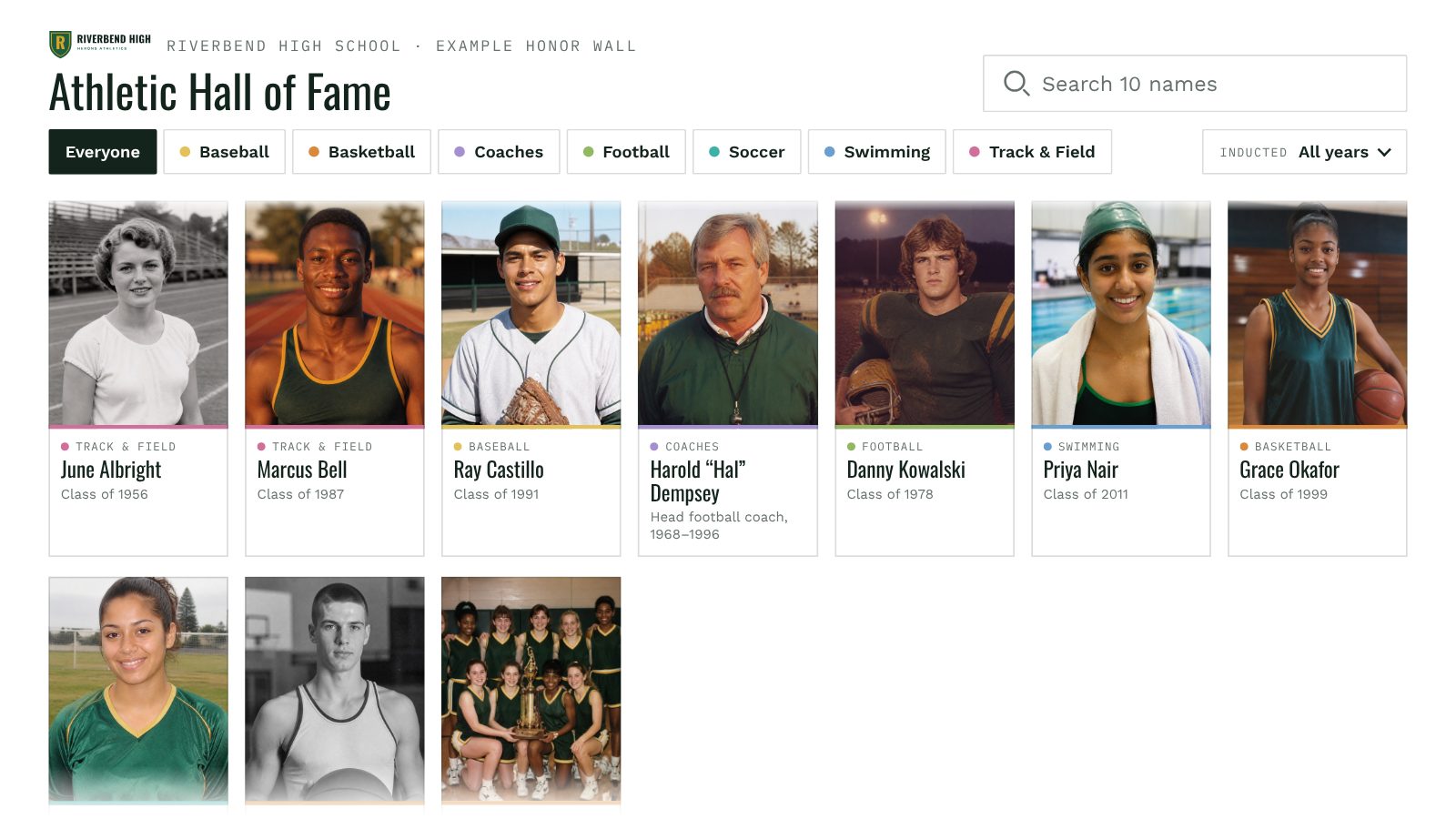
A donor wall has one job: make every donor feel seen, and show the next visitor that people like them give here. Engraved plaques do that well on opening day. Then a new gift arrives, the wall is full, and the newest donors wait months for a nameplate. A digital donor wall fixes that, as long as you plan it like a fundraising tool and not a TV on a wall.
This guide covers what to show, how to organize it, what it costs, and how to keep it current.
Start with what the wall is for
Before choosing a screen, decide what you want donors and visitors to take away. Most walls do one of three jobs:
- Thank everyone. Every donor above a set level, searchable by name. Best for annual funds, memberships, and alumni giving.
- Celebrate a campaign. The donors behind a new building, gallery, or scholarship, with the story of what they built together.
- Honor a few people deeply. Founding families, legacy donors, or named-gift donors, each with a photo and a real story.
Many walls mix all three. Pick one as the main job so the first screen is clear.
What to show for each donor
Plaques only hold a name. A screen can hold the reason a gift mattered. For each donor or family, aim for:
- Name exactly as the donor wants it, such as “The Ramirez Family” or “Anonymous”
- Giving level or campaign, which become the filters visitors tap
- A year, labeled your way, like “Since 2014” or “Gave 2025”
- A photo, if the donor is comfortable with one. A family photo, a portrait, or a picture of what their gift funded all work.
- A short story, 40 to 70 words, about what the gift made possible
The story is what turns a list into a reason to give. “Funded the conservation of the 1862 regimental flag” says more than any nameplate. Our guide to writing honoree profiles has a simple formula that works for donors too.
Set up giving levels and campaigns
Use the same names your development office already uses, so the wall matches your donor materials.
- Giving levels like Benefactor, Patron, and Friend, or your own circle names
- Campaigns like Building Fund 2026 or the Endowed Scholarship
- Groups like Founding Members, Corporate Partners, or Volunteers of the Year
Three to seven filters is plenty. More than that and visitors stop tapping.
A word on amounts. Most digital walls skip dollar figures and use levels instead. That keeps the wall about generosity, not ranking, and it saves you from updating amounts every year.
Respect donor preferences
Your gift records should already note how each donor wants to be recognized. Follow them exactly.
- List anonymous donors as “Anonymous,” or leave them off if they prefer.
- Ask before using a photo, and let families choose which one.
- Spell names the way the donor spells them, including “and” versus “&.”
- Keep the wall’s donor list in sync with your records, so a name never appears that shouldn’t.
What a digital donor wall costs
Cost depends on how much is custom. Here’s how the pieces break down.
Price ranges come from published vendor guides, retail listings, and organizations’ own donor wall order forms, checked in November 2026. Confirm current prices before you budget.
| Piece | Typical cost | Notes |
|---|---|---|
| Commercial touchscreen, 43 to 55 inch | About $750 to $2,100 for 43 inch at retail, more for larger | Commercial screens are made to run all day |
| Small computer or media player | About $150 to $800 | A mini PC or a Mac mini works |
| Wall mount or enclosure | A standard wall mount is the low end. A recessed custom enclosure runs about $4,000 to $10,000 | The enclosure is often the biggest single line item |
| Software | From a few hundred dollars a year to one-time licenses of several thousand dollars | Ask what’s yearly and what’s once |
| Full turnkey package from a recognition vendor | Roughly $10,000 to $65,000 | Usually includes custom design and installation |
Compared with plaques. Community donor walls commonly charge $180 to $600 for each engraved plaque, and larger or premium plaques cost more. A wall that adds 50 names a year at $250 each spends about $12,500 on nameplates in its first year, and again the next year, with more wall needed eventually. A digital wall has a higher starting cost, but each new name is free.
Many organizations keep a small permanent plaque for top donors and put everyone else, with their stories, on the screen.
Where to put it
- Where donors walk. Main entrance, lobby, or the space their gifts built.
- At a comfortable height. Keep the main controls within easy reach for someone seated, roughly 15 to 48 inches from the floor. Our accessible touchscreen checklist covers mounting.
- Near power and, ideally, a network. A wall that stays online updates on its own. If the spot has no Wi-Fi, choose software that can run offline.
Keep it current
The biggest advantage of a digital wall is speed. Plan for it:
- Pick one owner, usually someone in development, who adds new donors.
- Add donors the week the gift arrives. Telling a donor “you’re already on the wall” is a strong thank-you.
- Refresh stories once a year before your annual appeal, and add photos as you get them.
- Invite donors to find themselves. Mention the wall in thank-you letters and at events. People bring family to see their name.
How Tellcase handles donor walls
Tellcase includes an Honor Wall template that works as a digital donor wall. Set your giving levels or campaigns as categories, use your own word for the year (like Since or Gave), and add a photo and story for each donor or family. Visitors search by name on an on-screen keyboard and filter by level or decade. You can import your donor list from a spreadsheet, and the wall sorts by last name on its own.
Updates publish from a browser, even a phone, and the kiosk picks them up within a few minutes. Kiosks keep playing if the network drops, and the wall can run fully offline from a USB stick. Plans start at $49 a month for one kiosk, or $7,000 once for Tellcase Lifetime on up to 5 kiosks. Every account starts with a 14-day free trial, no card needed.
See the Honor Wall template, try the live demo, or compare plans.
Quick answers
What is a digital donor wall?
It's a touchscreen or display that recognizes donors in place of, or alongside, engraved plaques. Visitors can search for a name, filter by giving level or campaign, and tap a donor to see a photo and a short story about what their gift made possible.
How much does a digital donor wall cost?
It ranges widely. A basic setup with a commercial touchscreen, a small computer, and template software can come in under $5,000 for the first year. Published vendor guides put full turnkey packages, with custom design and a built-in wall enclosure, at roughly $10,000 to $65,000. Get an itemized quote so you can see what's hardware, what's design, and what's yearly.
Is a digital donor wall cheaper than plaques?
Over time it often is, because adding a name costs nothing. Community donor walls commonly charge $180 to $600 per engraved plaque, and many organizations eventually run out of wall space and pay to expand. A digital wall has a higher starting cost but no per-name cost.
Should a digital donor wall show gift amounts?
Most don't. Giving levels or named campaigns, like Founders Circle or the 2025 Capital Campaign, recognize generosity without listing dollar figures. Always follow each donor's recognition preference, including anonymous gifts.
Who updates a digital donor wall?
Usually the development or advancement office. With template software, adding a donor works like filling in a form, so updates can happen the same week a gift arrives instead of waiting for the next plaque order.